
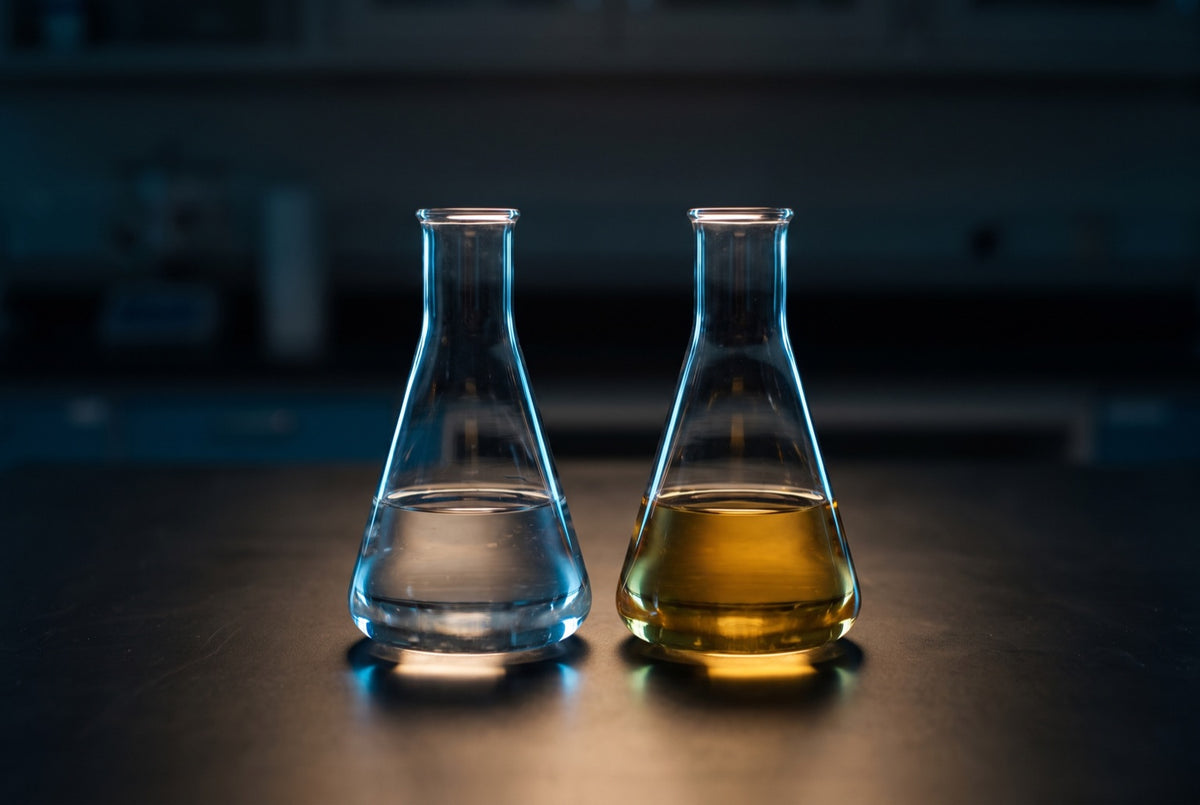
NAC and NAD+ are two different molecules with two different jobs. NAC (N-acetylcysteine) is a modified form of the amino acid cysteine that your cells can use to make glutathione, while NAD+ (nicotinamide adenine dinucleotide) is the coenzyme behind your cells' energy reactions. They share three letters and a shelf in the supplement aisle, and that's about it. NAC is also an FDA-approved drug with hospital uses; NAD+ is something your body builds from vitamin B3. Here's what each one does, what the research shows and whether taking both makes sense.
NAC vs NAD+: the short answer
They aren't the same thing, they aren't two versions of the same thing, and they aren't interchangeable. Different molecule, different job, different evidence. Asking which one is better is like asking whether a hammer beats a flashlight: it depends on whether your problem is nails or the dark.
Key takeaways
- NAC is the acetylated form of the amino acid cysteine. Its main research role is raising glutathione, one of your cells' main antioxidants.
- NAD+ is a coenzyme your body makes from niacin (vitamin B3). More than 400 enzymes need it, and its main job is energy metabolism.
- NAC was approved as a drug in 1963. In August 2022, FDA guidance said the agency would use enforcement discretion, letting NAC supplements stay on sale.
- Oral NAD+ has early human data: in a 2026 trial, a proprietary NAD+ powder raised NAD inside blood cells by 53% versus placebo in 5 days.
- No trial we found has tested NAC and NAD+ together, and nothing in the research says they must be kept apart.
Part of the mix-up is the names themselves, and even research titles add to it. A 2012 study of NAC and "nicotinamide dinucleotide phosphate oxidase", for example, is about an enzyme in diabetic rats, not about NAD+ supplements. Check the molecule before you trust the headline.
What is NAC?
NAC, short for N-acetyl-L-cysteine, is the N-acetylated derivative of the amino acid L-cysteine, according to its PubChem chemical record. That small chemical tweak matters because cysteine is one of the three building blocks of glutathione, alongside glutamate and glycine. A 2021 review of NAC and human health in Antioxidants explains that NAC's main antioxidant role "stems from its ability to increase the intracellular concentration of glutathione." So NAC isn't glutathione in a trench coat; it sits upstream of it. For the bigger picture, see what glutathione does.
NAC is also a medicine. The same review describes it as widely used to treat paracetamol (acetaminophen) overdose and as a mucolytic, a drug that thins mucus. Those are medical uses handled by clinicians in hospitals and clinics, not self-care.
That medical history explains NAC's unusual status in the US. The FDA's August 2022 guidance on NAC states that NAC was approved as a new drug on September 14, 1963, before it was ever marketed as a supplement. That timing excludes it from the legal definition of a dietary supplement.
Even so, the agency said its initial review "has not revealed safety concerns." It also noted that NAC supplements had been sold in the US for over 30 years. So it announced it would exercise enforcement discretion. In plain terms, it does not intend to object to NAC products labeled as dietary supplements that otherwise follow the law, while it decides on rulemaking. That leeway does not cover any NAC product sold to diagnose, cure, treat or prevent disease.
What is NAD+?
NAD+, or nicotinamide adenine dinucleotide, is a coenzyme: a helper molecule that enzymes need to do their work. Your body makes it from niacin (vitamin B3) and from some of the tryptophan in dietary protein. The NIH Office of Dietary Supplements' niacin fact sheet notes that all tissues convert niacin into NAD and that more than 400 enzymes require it, more than for any other vitamin-derived coenzyme.
Its headline job is energy. NAD+ is a redox cofactor, meaning it carries electrons in metabolic reactions: it picks them up and becomes NADH, its reduced form, then passes them on. ODS explains that NAD is mainly involved in the reactions that transfer the energy in carbohydrates, fats and proteins to ATP, your cells' energy currency. NAD+ also serves enzymes outside energy metabolism: ODS lists roles in maintaining genome integrity, controlling gene expression and cell communication, and researchers name sirtuins and PARPs among the NAD+-dependent enzyme families. The full tour is in our guide to what NAD+ is and how it works.
NAD+ vs NAC at a glance
| Question | NAC | NAD+ |
|---|---|---|
| What it is | A modified amino acid: the N-acetylated form of L-cysteine | A coenzyme (a dinucleotide) that enzymes need to work |
| What it is built from | The amino acid cysteine | Niacin (vitamin B3) and tryptophan, in your body |
| Molecular weight | 163.2 g/mol | 663.4 g/mol, about four times heavier |
| Main job | Supplies cysteine and raises cellular glutathione | Carries electrons in energy reactions (cycling with NADH); required by more than 400 enzymes |
| How it is studied in people | Glutathione and oxidative-stress markers, often combined with glycine (GlyNAC) | NAD levels in blood: one 5-day oral NAD+ trial, plus separate trials of precursors such as NMN and NR |
| US status | Approved as a drug in 1963; sold as a supplement under FDA enforcement discretion (August 2022 guidance) | Sold as a dietary supplement |
| Sold by Infinite Labs? | No | Yes: 500 mg NAD+ capsules |
Molecular weights come from PubChem's records for NAC and NAD+.
What does the research show for each?
Both molecules have human data, but the studies measure different things. NAC research is mostly about glutathione. Oral NAD+ research is mostly about NAD levels in blood.
NAC: studied mainly for glutathione
The best-known human work pairs NAC with glycine, another of glutathione's building blocks, as "GlyNAC." In a 16-week randomized, placebo-controlled trial published in 2023, 24 older adults took GlyNAC or a placebo (12 per group). GlyNAC improved glutathione deficiency and oxidative-stress markers compared with placebo, along with several measures of physical function, and it was safe and well tolerated. Because NAC came packaged with glycine, the trial can't isolate NAC's share of the result.
A larger trial tells a more mixed story. In a 2022 randomized trial of 114 healthy older adults, two weeks of GlyNAC did not raise glutathione across the whole group. A follow-up analysis found a rise only in people who started with high oxidative stress and low glutathione, at the medium and high doses. That matches the 2021 review's verdict that NAC's effectiveness in clinical trials is "still limited." The biology is solid; the trial results are still catching up.
Oral NAD+: early human data
For NAD+ itself, the clearest human data come from a 2026 randomized, placebo-controlled trial in GeroScience. Sixty healthy adults aged 45 to 75 took a proprietary oral NAD+ powder (LNAD+) or a placebo for five days, with 50 in the main analysis. NAD inside blood cells, measured in whole blood, rose 53% versus placebo by day 6, while NAD in plasma stayed flat. The powder was very well tolerated, with one mild case of nausea. The trial's main endpoints were blood NAD levels; none of its secondary clinical, wellbeing or wearable measures held up after statistical correction.
That inside-the-cell result is the interesting part. NIH's Office of Dietary Supplements notes that NAD in food is converted to nicotinamide in the gut before it is absorbed. That makes what happens inside cells after an oral dose exactly the right question to ask. Much of the other NAD+-boosting research uses precursors such as NMN and NR, a separate topic covered in NMN vs NAD+. For the wider evidence, here's what NAD+ research shows.
Can you take NAC and NAD+ together?
Nothing in the research says they have to be kept apart, and nothing shows that pairing them adds a benefit. No trial we found has tested NAC alongside an NAD+ supplement. The closest research uses multi-ingredient "combined metabolic activator" formulas, which pair NAC or cysteine with other metabolic ingredients, in some versions nicotinamide or niacin (NAD+ precursors, not NAD+ itself). In a placebo-controlled study of 70 healthy volunteers, researchers tracked short-term shifts in blood metabolites and found closely similar metabolic responses whether the formula used NAC or cysteine. The cysteine version was well tolerated. That's metabolite data from a research formula, not a health outcome.
So treat them as two separate decisions. Two trendy molecules land on one label and suddenly the bottle acts like it discovered electricity; the research hasn't caught up with that marketing. Decide what you want each one for, and read the medication note below, which applies to both.
Who should be careful with NAC?
NAC has a long safety record. The 2021 review calls its safety profile well established, with toxicity uncommon and dependent on the route of administration and high doses. The FDA said in 2022 that its initial review had not revealed safety concerns with NAC in supplements.
The side effect people are most likely to notice is a queasy stomach. In a multicenter review of 503 patients treated with NAC for acetaminophen overdose, nausea and vomiting were the most common reactions. They hit 23% of patients on oral NAC versus 9% on IV, and there were no serious NAC-related events. That was hospital overdose treatment, not everyday supplement use, but it shows where NAC's side effects tend to land. The 2021 review also notes that NAC's sulfur smell, which it compares to rotten eggs, can add to the nausea.
Because NAC is also an approved drug, check with your clinician or pharmacist before taking it if you use prescription medicines, are pregnant or breastfeeding, or are managing a medical condition. The same check makes sense before adding NAD+; for that side of the comparison, see NAD+ side effects and safety.
Quick answers
Should I take NAC or NAD+?
Pick by the job. If your interest is glutathione and antioxidant biology, NAC is the molecule that research centers on. If your interest is cellular energy metabolism, NAD+ is the coenzyme in that conversation. As supplements, neither treats any disease, and one can't stand in for the other. Infinite Labs makes an NAD+ supplement and does not sell NAC.
Does NAC make you look younger?
Not according to the human research. NAC trials measure glutathione and oxidative-stress markers, not wrinkles or how old someone looks, so "younger-looking" promises are marketing, not findings.
Who should avoid taking NAC?
Anyone who takes prescription medicines, is pregnant or breastfeeding, or is managing a medical condition should check with a clinician first, since NAC is also an approved drug. If your stomach is sensitive, know that nausea is the side effect most often reported.
Where Infinite Labs NAD+ fits
If NAD+ is the molecule you're after, Infinite Labs NAD+ capsules are a strong pick for a simple daily routine. Each veggie capsule delivers 500 mg of NAD+ with 2.5 mg of BioPerine, a standardized black pepper extract, and every amount is printed on the label. Take one capsule daily with food, or as recommended by a qualified healthcare professional; each bottle holds 30 servings. The capsule shell is plant-based hypromellose, the flow aid is Nu-FLOW (made from rice hulls), and the formula is third-party tested and made in GMP-certified facilities.
It contains no NAC, and Infinite Labs doesn't sell NAC, so this is a focused NAD+ routine, not a "buy both" pitch. Comparing NAD+ products first? Our guide to choosing an NAD+ supplement walks through form, dose and label checks. Certificates of analysis are available on request.
The practical takeaway
- NAC and NAD+ aren't rivals. NAC is a cysteine compound studied for glutathione and used in hospital medicine; NAD+ is the coenzyme behind your cells' energy reactions.
- Choose by the job you care about, and don't let research on one molecule stand in for the other.
- Taking both means two separate decisions: nothing in the research says they must be kept apart, and nothing shows they work better together.
NAC vs NAD+ isn't a battle; it's a category cleanup. If NAD+ is your pick, Infinite Labs NAD+ gives you 500 mg in one capsule a day, taken with food.
Sources
- National Library of Medicine. PubChem compound summary: N-Acetyl-L-Cysteine (CID 12035).
- National Library of Medicine. PubChem compound summary: NAD+ (nadide, CID 5892).
- U.S. FDA. Policy Regarding N-acetyl-L-cysteine: Guidance for Industry. August 2022.
- Tenório MCDS et al. N-Acetylcysteine (NAC): Impacts on Human Health. Antioxidants. 2021.
- NIH Office of Dietary Supplements. Niacin, health professional fact sheet.
- Kulkarni CA, Brookes PS. Cellular Compartmentation and the Redox/Nonredox Functions of NAD+. Antioxidants & Redox Signaling. 2019.
- Kumar P et al. Supplementing Glycine and N-Acetylcysteine (GlyNAC) in Older Adults: A Randomized Clinical Trial. J Gerontol A Biol Sci Med Sci. 2023.
- Lizzo G et al. A Randomized Controlled Clinical Trial in Healthy Older Adults to Determine Efficacy of Glycine and N-Acetylcysteine Supplementation on Glutathione Redox Status and Oxidative Damage. Frontiers in Aging. 2022.
- Kornilov SA et al. Oral LNAD+ rapidly elevates whole blood intracellular NAD and metabolic flux without elevating plasma NAD: evidence from a randomized controlled trial. GeroScience. 2026.
- Yang H et al. Longitudinal metabolomics analysis reveals the acute effect of cysteine and NAC included in the combined metabolic activators. Free Radic Biol Med. 2023.
- Bebarta VS et al. A multicenter comparison of the safety of oral versus intravenous acetylcysteine for treatment of acetaminophen overdose. Clin Toxicol. 2010.
- Lei S et al. Effects of N-acetylcysteine on nicotinamide dinucleotide phosphate oxidase activation and antioxidant status in heart, lung, liver and kidney in streptozotocin-induced diabetic rats. Yonsei Med J. 2012.
Educational information, not medical advice. Infinite Labs NAD+ is not intended to diagnose, treat, cure, or prevent any disease.

Keep it useful
Join the conversation