
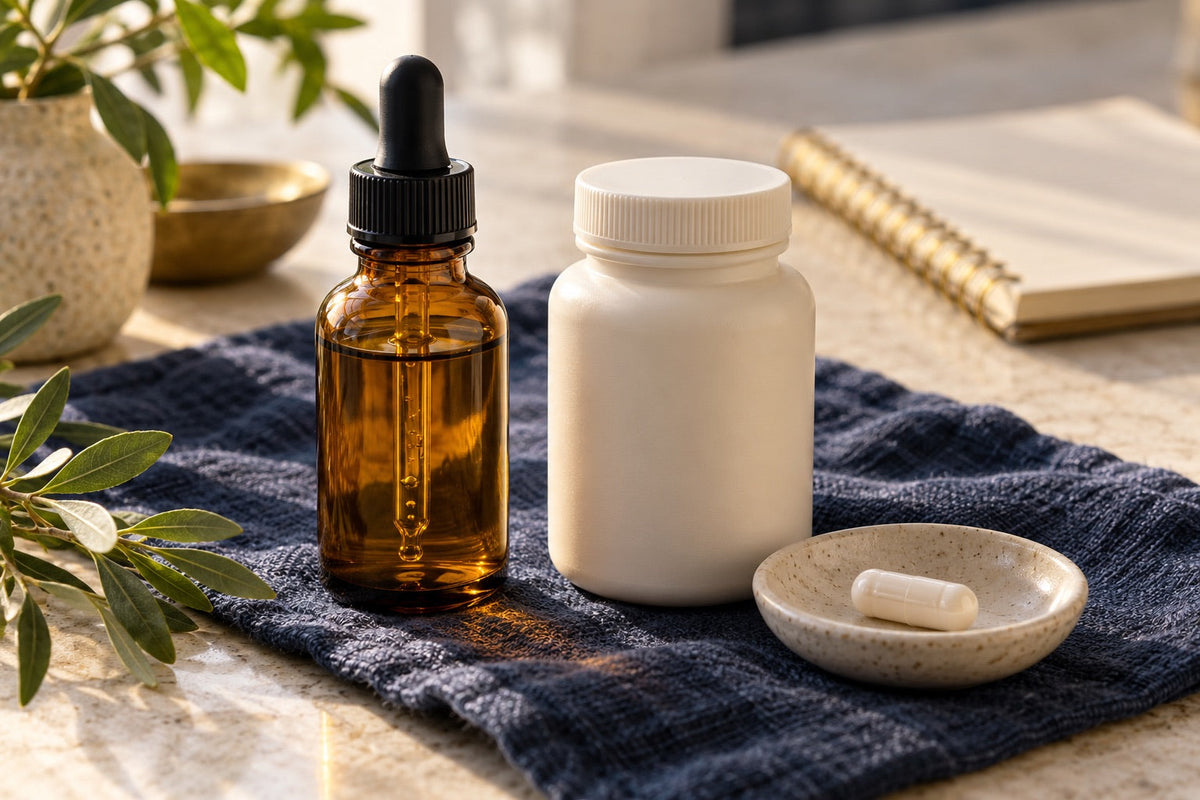
The best glutathione supplement for you should have a clear amount per serving, a format that fits your routine and quality information you can check. Compare the ingredient list, research and cost per day before you choose.
This guide compares liquids, capsules and tablets. It gives you a simple checklist you can use with any product.
Our Liposomal Glutathione+ offers a measured liquid format for people who prefer an alternative to capsules. Use the serving, ingredient and storage information on its current label when comparing it with other options.
What should you look for in a glutathione supplement?
Your cells make glutathione from three amino acids: glutamate, cysteine and glycine. It helps antioxidant enzymes work and helps cells keep their normal chemical balance. Our glutathione guide explains these roles. Here, we focus on choosing a supplement you take by mouth.
Human studies have tested different forms and daily amounts. A four-week randomized trial included 40 healthy adults. They took 500 milligrams of standard oral glutathione twice a day or a placebo. The groups did not differ significantly in measured glutathione levels or markers of oxidative stress.
A later six-month randomized trial included 54 healthy nonsmokers. Daily doses of 250 or 1,000 milligrams raised several measured glutathione levels. The higher dose had the larger changes. The studies used different methods and lasted different lengths of time.
Those results concern glutathione levels, not proof of disease prevention, reversed aging or faster “detox.” A small liposomal pilot study also found blood glutathione changes after four weeks in 12 adults. It tested one named formula and had no placebo group. The results help explain the research on that formula, rather than every liposomal product.
Which oral glutathione option fits your priorities?
Start with glutathione milligrams per daily serving. That amount may differ from the total weight of a capsule or liquid blend. The study amounts below give research context. They are not dose advice for everyone or results promised for a retail product.
| Option | Dose to verify on its label | Practical fit | Evidence limit |
|---|---|---|---|
| Standard reduced-glutathione capsule | Actual GSH milligrams; studies used 250 or 1,000 mg/day | Premeasured and portable | Human biomarker findings differ by study; no guaranteed clinical benefit |
| Liposomal liquid | GSH milligrams per measured liquid serving, separate from lipid blend weight | No pill; check taste and storage after opening | Small studies involve named formulations, not every liquid product |
| Liposomal capsule or tablet | GSH milligrams per capsule or tablet and units per daily serving | Portable with no liquid measuring | “Liposomal” on a label does not verify delivery or outcomes |
| S-acetyl glutathione | Milligrams of the S-acetyl derivative, clearly distinguished from GSH | Check its specific dosage form and added ingredients | Limited human comparisons; not proven superior for a clinical outcome |
S-acetyl glutathione is a modified form of glutathione. It is not another name for reduced GSH. An EFSA safety assessment describes a small study comparing single doses. The doses did not contain equal numbers of molecules. That limits the comparison. A study of exposure also does not establish which product gives better health outcomes.
How do you compare glutathione supplements?
| Check | What to look for | Why it matters |
|---|---|---|
| Amount | Milligrams of glutathione per serving and servings per day | Lets you compare like with like |
| Form | Standard, liposomal, micellar, or another clearly named formulation | Delivery claims should match evidence for that formulation |
| Ingredient list | All ingredients and allergens, not just front-label claims | Sweeteners, oils, flavors, and other additions may matter to you |
| Quality evidence | Independent certification or a current, lot-specific test you can inspect | Helps assess identity, strength, and contaminants |
| Cost | Price per daily serving at the amount you plan to use | A cheap bottle can be an expensive month |
| Practical fit | Taste, storage, serving size, travel, and tolerability | A format you avoid taking offers little value |
1. Read the Supplement Facts panel
Find the glutathione amount per serving. A label that says “liposomal complex, 1,000 mg” may include the carrier in that weight. It does not always mean 1,000 milligrams of glutathione. Check the serving size and servings per day. Then compare products at the same ingredient amount.
Read the full ingredient list too. Liquids may contain flavors, sweeteners, preservatives or oils. Capsules and tablets may contain binders or shell ingredients. These additions can serve a useful purpose. Check whether they fit your preferences. A clearly listed glutathione amount makes the comparison easier.
2. What should the best liposomal glutathione supplement offer?
A liposomal formula packages an ingredient with lipid, or fat-based, components. The aim is to help deliver the ingredient. Look for clear details about the formula and the research behind any specific claim.
One 2026 human comparison found higher plasma exposure after a single dose of one proprietary liposomal ingredient than after plain glutathione. It included 12 people, with six in each group. It was open-label, and all authors were affiliated with the ingredient supplier. The result applies to that ingredient under those study conditions.
Higher exposure is a delivery measurement. It does not, on its own, prove a better health outcome. For a claim about a particular product, check that the study used the same formula and dose. Our liquid-versus-capsule comparison covers practical format choices.
3. Look for quality evidence you can verify
The NIH Office of Dietary Supplements explains what independent quality checks can show. They can check listed ingredients and harmful contaminant levels. A quality seal gives useful information. It does not establish safety for every person or prove a health benefit.
If a company offers a certificate of analysis, look for the finished-product lot number and the tests performed. A lot-matched report helps connect the testing to the bottle you are considering.
Ask whether the testing is current. Check that it covers the ingredient's identity, amount and relevant contaminants. GMP refers to manufacturing practices. Independent testing and studies of health benefits answer separate questions.
4. Compare the actual daily cost
Divide the bottle price by the number of daily servings you would take. Then check whether those servings deliver comparable glutathione amounts. A “30-serving” liquid and a “60-capsule” bottle may both last one month if the capsule label calls for two per day.
Watch for promotional prices that hide subscription terms. A higher price can reflect a different formulation or testing program, but price alone is not a proxy for better results.
What do reduced glutathione and other label terms mean?
“Reduced glutathione,” or GSH, names a chemical form. Reduced does not mean weak. “Oxidized glutathione,” or GSSG, is a related form in the body's chemical balance. A branded ingredient name, such as Setria, helps identify its supplier. That can help you trace an ingredient used in research. The finished formula and daily amount still matter.
“Liposomal” describes a delivery design. “Liquid,” “tablet” and “capsule” describe the format you take. A liquid need not be liposomal. A capsule can contain liposomal material. If a claim promises “100% absorption” or says a product is proven for everyone, ask for the human study behind it.
Which claims should make you pause?
Look for specific, supported claims rather than promises to cure disease, replace medical care or guarantee skin changes. The FDA's supplement guidance explains that supplements are regulated differently from drugs. They are not pre-approved as treatments. A change in a blood marker is not the same as a health outcome.
Oral glutathione has been tolerated in small studies. Those studies cannot rule out every rare or long-term effect. Ask a clinician before use if you are pregnant, have a medical condition or take medication.
Quick answers
Is the most expensive glutathione supplement the best?
No reliable evidence says price predicts a better clinical result. Compare ingredient amount, verifiable quality, formula, and cost per day. Pay extra only for a feature you actually value and can verify.
Are third-party seals a guarantee?
No. They can support identity and quality claims. As NIH notes, they do not establish safety or effectiveness for every use. A seal is one part of the checklist, not an outcome trial.
Should I choose a liquid or a capsule?
Choose based on labeled dose, the exact formulation's evidence, storage, taste, and ease of use. The word “liquid” alone does not establish superior absorption.
What is the best dose?
There is no universal oral dose proven to deliver a specific health outcome. Published healthy-adult studies have used, for example, 250 to 1,000 milligrams daily, with different designs and biomarker results. Follow the chosen product's label and ask a clinician about individual concerns.
The takeaway
Use the checklist to compare the glutathione amount, formulation, ingredients, cost and everyday routine. For Infinite Labs Liposomal Glutathione+, start with the current serving and storage directions. Certificates of Analysis are available on request through our contact page, so you can ask about the quality information relevant to your bottle.
About the author
Arjun Sareen is CEO of Infinite Labs and Infinite Labs Digital and a contributor to the Infinite Labs Journal. This brand-owned guide provides educational information, not individual medical advice.



Keep it useful
Join the conversation