
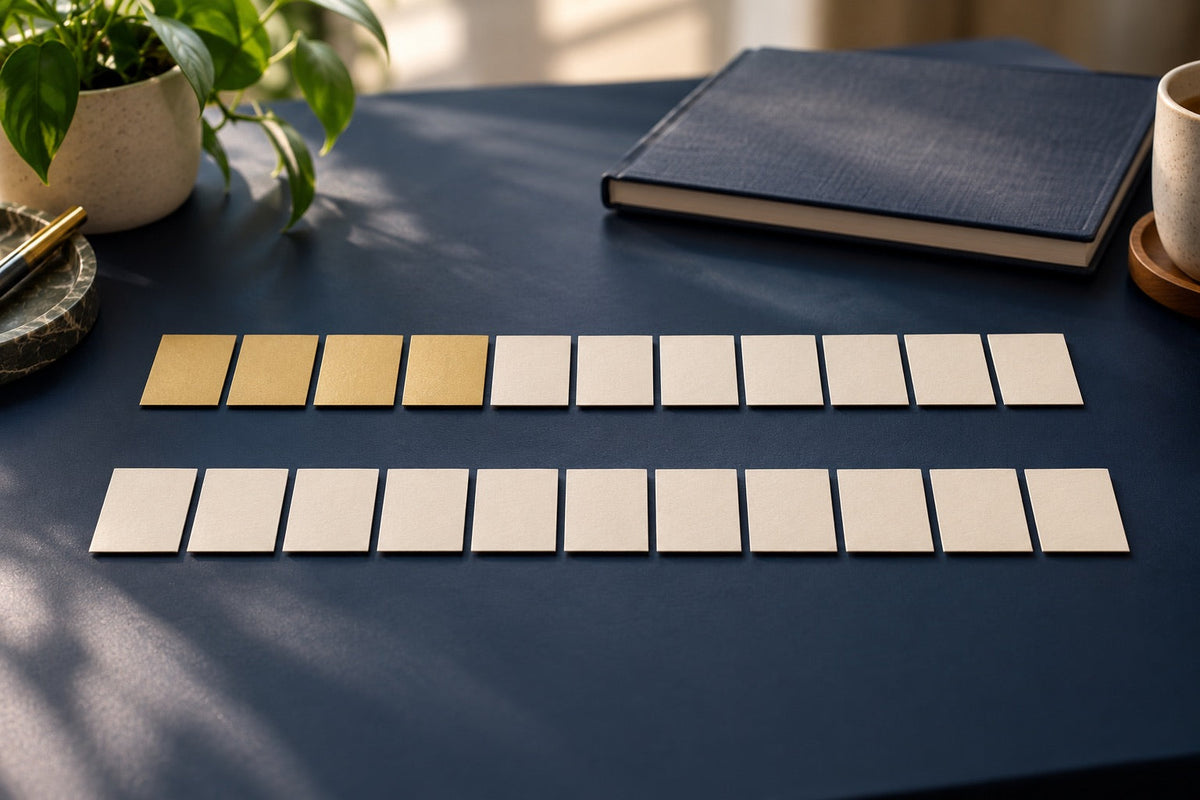
No, a creatine loading phase is not necessary. It is an optional fast lane. Taking around 20 grams of creatine monohydrate per day for five to seven days can fill muscle stores more quickly. Taking 3–5 grams every day without loading gets you to a similar destination over several weeks. The choice is speed versus simplicity, not “works” versus “doesn't work.”
If a supplement ad says you must load or you have somehow wasted the tub, put the tub down for a second. The muscle-biopsy data disagree. Here is what loading does, when the faster approach may help, and how to keep either routine simple.
What is a creatine loading phase?
Loading means taking a larger amount of creatine monohydrate for a short period to raise the creatine stored in your muscles quickly. A widely used adult protocol is about 20 grams per day, split into four 5-gram servings, for five to seven days. It is often described by body weight as approximately 0.3 grams per kilogram per day. After that, most protocols switch to a maintenance dose of 3–5 grams per day. The ISSN position stand and NIH Office of Dietary Supplements describe these approaches.
Why the four servings? A large single scoop is unnecessary and may cause stomach trouble. Splitting the daily amount also better resembles the studied protocols. Loading is not a license to take 20 grams forever. Once muscle stores are elevated, the point is to maintain them.
Does loading work faster than a regular dose?
Yes, for raising measured muscle creatine stores. In a 1996 study of 31 men, muscle total creatine rose about 20% after six days at 20 grams a day. A group taking 3 grams a day reached a similar increase more gradually, after 28 days. That is the useful numerical comparison behind most loading advice.
It is also a useful limit on the claim: the study measured creatine in muscle. It did not show that loading produces a better long-term strength or muscle-building result than steady daily use. The fast lane gets muscle stores up sooner; it does not transform the road.
| Approach | First phase | Then | Main tradeoff |
|---|---|---|---|
| Loading | About 20 g/day, divided into four servings, for 5–7 days | 3–5 g/day | Faster store increase; more servings and possibly more GI discomfort |
| No loading | 3–5 g/day from day one | Continue 3–5 g/day | Simpler; muscle stores rise over several weeks |
Which option should you choose?
Choose loading if you have a near-term training block or event, you want to reach elevated muscle stores quickly, and you are comfortable taking several servings a day for a week. Remember that some body-weight increase from water in muscle can appear sooner with loading. If you compete in a weight-class sport, plan for that possibility.
Choose the steady route if there is no deadline, you prefer one daily scoop, or larger doses upset your stomach. For most recreational lifters, this is the wonderfully boring option. Three to five grams every day, including rest days, asks almost nothing of your schedule.
Either approach works best alongside consistent training and recovery. Creatine is most useful for short, hard, repeated efforts and the training adaptations they support. The NIH review finds little value for endurance-only events such as distance running.
How do you load creatine without making your stomach protest?
Use a measured amount of creatine monohydrate and divide the daily total into approximately four 5-gram servings. Spacing them through meals is easier for many people than trying to drink all four before breakfast. Follow the directions on your product, especially if the serving size differs from 5 grams. Do not guess with a heaped kitchen spoon.
Gastrointestinal complaints such as nausea or diarrhea are reported with creatine, especially when a large dose is taken at once. If loading is uncomfortable, you can stop the high-dose phase and move to a regular 3–5 gram daily amount; loading is optional. Keep normal hydration habits appropriate to your training and climate. You do not need a heroic water-chugging contest.
If you have kidney disease, abnormal kidney tests, are pregnant, or have another medical reason to monitor supplements, discuss creatine with your clinician before starting. A simple general-purpose dosing article cannot settle an individual medical decision.
What happens after the loading week?
Switch to maintenance. In Hultman's experiment, a 2-gram daily maintenance dose held the elevated muscle concentration for 30 days. Modern practical guidance commonly recommends 3–5 grams daily, accounting for different body sizes and activity patterns. Keep that routine on workout and rest days. No special “reloading” ritual is needed every Monday.
If you stop supplementing, stores do not collapse overnight. In the same study, they gradually returned toward the previous level across roughly 30 days without maintenance. That supports two calm conclusions: a single missed scoop is not an emergency, and a week off creatine is not a permanent loss of progress.
Does loading make creatine work better?
It makes your muscle creatine pool rise sooner. Whether that translates into a noticeable difference for your training depends on what you do, your starting muscle creatine level, how you respond, and how long you compare the routines. Studies generally find the biggest practical effects for repeated high-intensity work. A runner preparing for a marathon should not expect the same payoff as someone doing repeated sprints or sets of resistance exercise.
Response also varies. People with lower initial creatine stores may have more room to increase them, but that does not let you predict an individual's gains from diet or body type alone. Avoid any product promising an exact number of pounds or percentage increase. Human training results are considerably less tidy than ad copy.
Quick answers
Can I take 20 grams all at once?
That is not how the common loading protocol is described. Split the total into smaller servings. A single large dose may be uncomfortable and offers no proven advantage.
Can I skip the loading phase entirely?
Yes. A daily 3–5 grams is a standard alternative. In the 1996 muscle-biopsy study, 3 grams daily produced a similar muscle-creatine rise to loading, but took about four weeks rather than six days.
Do I need to cycle creatine?
Routine cycling is not required by standard creatine protocols. If you stop for personal reasons, your muscle stores will gradually move back toward baseline. You can resume a normal daily amount when you restart; you do not automatically need another loading week.
Is loading safe?
Typical short loading protocols have been studied in healthy adults, and the NIH summary reports few safety concerns at these doses. Temporary water-weight gain and stomach symptoms are the most practical considerations. Individual health conditions still call for individual advice.
The takeaway
Loading is a timing decision. About 20 grams a day for a week can fill muscle creatine stores faster; 3–5 grams every day raises them more gradually. Choose the routine you can follow, then let your training do the interesting part.
The studies above compare creatine monohydrate dosing strategies. Ready to choose a routine? Compare the serving directions for Infinite Labs Creatine Monohydrate with the loading and maintenance options above.




Keep it useful
Join the conversation